Dover Vigilantes Warn of Repeat Protests If Police Fail to Act
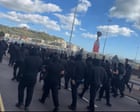
Dover Vigilantes Threaten Further Disruption
Activist groups and political figures have issued stark warnings that Dover vigilantes will stage additional demonstrations if authorities fail to strengthen police intervention measures. The masked, black-clad protesters who recently obstructed traffic at the port represent a growing challenge for law enforcement and local governance, with experts suggesting that coordinated police response remains essential to prevent future incidents.
The unauthorized blockades at Dover's port facilities have raised serious concerns among officials responsible for maintaining public order and transport infrastructure. Multiple stakeholders have emphasized that without decisive police action, Dover vigilantes operating under various organizational banners will continue exploiting perceived enforcement gaps to organize demonstrations at scale.
Patriot Platform's Anti-Immigration Stance
The group claiming responsibility for recent Dover vigilante activities identifies as Patriot Platform, an organization with documented connections to far-right movements. The group frames itself as an anti-immigration advocacy organization, describing their mission through rhetoric emphasizing "fierce love for our homeland." This framing has proven effective in mobilizing supporters across social media platforms and organizing rapid-response demonstrations.
Anti-immigration groups like Patriot Platform have demonstrated significant capacity to marshal supporters quickly, leveraging decentralized communication networks and digital organizing tools. The Dover incident showcases how such groups can coordinate large-scale public demonstrations while maintaining plausible deniability through distributed organizational structures.
Concerns About Police Response and Capacity
Hope Not Hate, a prominent counter-extremism organization, has specifically criticized police "inaction" as a contributing factor enabling the far-right linked group to mobilize at considerable scale. The organization's founder has publicly stated that current enforcement strategies appear insufficient to deter repeat demonstrations by Dover vigilantes or similarly motivated groups.
Law enforcement officials face significant operational challenges when responding to demonstrations involving masked participants wearing coordinated black clothing. The visual uniformity adopted by Dover vigilantes creates psychological impact while complicating individual identification for law enforcement purposes. Police resource allocation, tactical response protocols, and coordination between local and national security services all factor into the effectiveness of preventative measures.
Political Responses and Policy Implications
Elected representatives have joined campaigners in calling for enhanced police strategies specifically targeting far-right mobilization networks. The Dover vigilantes' success in disrupting port traffic without significant immediate consequences has prompted broader discussions about enforcement priorities and public order management in coastal communities.
The anti-immigration motivations driving Patriot Platform and related organizations reflect broader political tensions regarding immigration policy and border control. Dover, as a major entry point for Channel crossings, has emerged as a focal point for groups seeking to influence immigration debates through direct action and public demonstrations.
Future Prevention and De-escalation
Political commentators and security analysts suggest that effective responses to Dover vigilantes must incorporate multiple strategies beyond traditional policing. Community engagement initiatives, counter-messaging campaigns, and targeted intelligence gathering directed at identifying core organizers represent complementary approaches to preventing repeat demonstrations.
The threat of continued mobilization by Dover vigilantes emphasizes the need for proactive law enforcement planning. Without demonstrable progress in managing anti-immigration demonstrations, the cycle of blockades and disruption risks becoming normalized, potentially inspiring similar actions in other locations with significant immigration activity.
Broader Implications for Public Order
The incidents at Dover illuminate challenges facing democratic societies managing the intersection of free speech protections, public order maintenance, and national security concerns. Far-right linked organizations like Patriot Platform exploit these tensions, framing unauthorized disruptions as legitimate political expression while forcing authorities to calibrate responses carefully.
Community leaders have emphasized that tackling far-right recruitment and mobilization requires sustained effort extending beyond immediate police responses to specific demonstrations. Addressing the underlying grievances that fuel anti-immigration sentiment represents a longer-term strategic consideration for policymakers seeking to reduce the appeal of groups like Patriot Platform.
Going forward, the potential for repeated Dover vigilante actions underscores the importance of coordinated responses combining law enforcement action, political communication strategies, and community engagement designed to reduce the attractiveness of extremist organizing activities.