Hamas Disarmament Plan Presents Complex Path to Gaza Peace Despite Significant Hurdles
Hamas Disarmament Plan: A Complex Path Forward
The Hamas disarmament plan represents a crucial yet complicated initiative aimed at establishing sustainable peace in Gaza. While political complexities, military considerations, and decades of mistrust create substantial barriers to implementation, this framework offers an unprecedented opportunity for regional stabilization and civilian recovery in one of the world's most conflict-affected territories.
Understanding the Political Landscape
Achieving any agreement involving Hamas disarmament requires navigating an intricate web of diplomatic, military, and humanitarian challenges. The political environment surrounding Gaza has historically resisted simple solutions, with multiple stakeholders holding divergent interests and priorities. International bodies, regional powers, and local authorities each bring competing objectives to negotiations.
The Hamas disarmament initiative must account for the legitimate security concerns of neighboring nations while simultaneously addressing Palestinian aspirations for self-determination and sovereignty. This balancing act demands unprecedented levels of political will and commitment from all parties involved in the negotiation process.
Legacy of Conflict and Trust Deficits
The foundation of mistrust pervading the region cannot be overlooked when examining realistic prospects for a Hamas disarmament plan. Decades of armed conflict, broken agreements, and civilian casualties have created deep psychological wounds that complicate even preliminary discussions. Zero-trust environments, where historical grievances outweigh optimistic projections, define the current diplomatic landscape.
Previous peace initiatives have faltered when implementation exceeded political commitment. Stakeholders remain skeptical whether security guarantees will prove sufficient to convince armed organizations to relinquish military capabilities. These legitimate concerns stem from documented instances where disarmed groups faced subsequent marginalization or persecution.
The Destruction Challenge and Reconstruction Imperatives
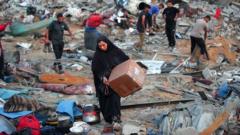
Gaza's infrastructure damage presents both logistical and symbolic obstacles to meaningful Hamas disarmament discussions. Thousands of casualties and widespread destruction have created humanitarian crises that inevitably overshadow political negotiations. Civilian populations require immediate assistance for survival, shelter, and basic services before committing attention to long-term political settlements.
Reconstruction demands exceptional international financial resources and coordination. The scale of devastation necessitates prioritizing humanitarian relief over political restructuring, potentially delaying disarmament frameworks. Yet paradoxically, economic stabilization and infrastructure recovery depend upon achieving the security conditions that disarmament agreements would provide.
Military Strategic Considerations
The military dimensions of any Hamas disarmament plan require careful analysis of weapons stockpiles, command structures, and enforcement mechanisms. Verifying complete disarmament across fragmented organizational units presents unprecedented technical and diplomatic challenges. Underground facilities, distributed weapons caches, and decentralized decision-making complicate comprehensive accounting.
International verification teams would need unprecedented access and cooperation to ensure compliance. Establishing credible monitoring mechanisms that satisfy security requirements without appearing to compromise Palestinian sovereignty remains conceptually and practically difficult. Technical solutions exist but require political frameworks that currently lack sufficient consensus.
Glimmers of Hope Amid Obstacles
Despite formidable challenges, the Hamas disarmament framework offers genuine possibilities for transformative change. Previous intractable conflicts have yielded to persistent diplomatic efforts when conditions aligned and stakeholder commitment crystallized. Regional precedents demonstrate that even deeply entrenched organizations can accept political transformation when offered credible incentives and security guarantees.
Economic development prospects, normalized regional relationships, and international investment opportunities could incentivize organizational leadership to pursue political rather than military strategies. Youth populations particularly might embrace civilian pathways offering superior living standards compared to perpetual conflict.
International Community Role and Support
Successful implementation of any Hamas disarmament plan demands robust international engagement, monitoring, and enforcement capacity. Multilateral organizations, neighboring states, and external powers must commit resources and diplomatic capital to bridge trust deficits and guarantee compliance. Economic incentives, security assistance, and reconstruction funding become leverage points for encouraging cooperation.
The international community's historical inconsistency, however, creates skepticism about long-term commitment. Waning attention spans and shifting geopolitical priorities have previously undermined similar initiatives. Establishing permanent institutional mechanisms rather than temporary oversight bodies could provide needed continuity.
Path Forward and Realistic Expectations
Moving forward requires acknowledging that perfect solutions remain impossible given Gaza's complex realities. Incremental progress, building trust through small agreements, and creating positive incentive structures offer more realistic approaches than comprehensive settlements. The Hamas disarmament plan, while ambitious, represents directional movement toward civilian-centered governance and peaceful coexistence.
Success ultimately depends on whether competing stakeholders can prioritize Gaza's suffering populations over historical grievances and ideological maximalism. The opportunity exists, though obstacles remain substantial and outcomes uncertain.


